
Sharks and Pollution in Puget Sound
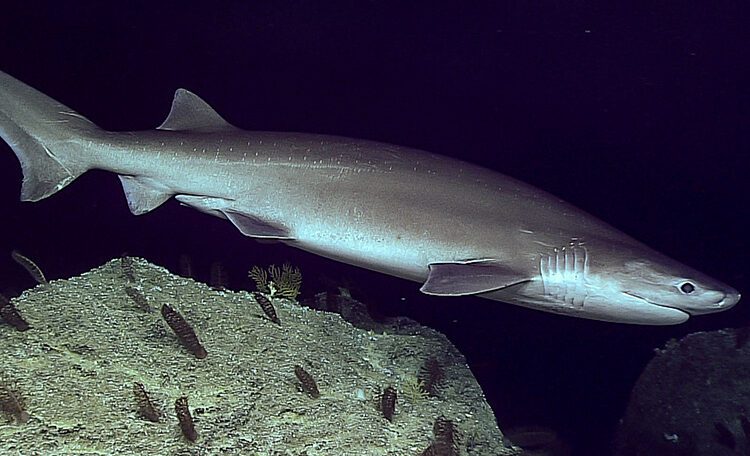
Our local waters are home to some truly remarkable predators: sharks. In the Puget Sound and greater Salish Sea, we are fortunate to coexist with animals whose evolutionary lineage stretches back more than 450 million years—long before the first dinosaurs appeared. These ancient fishes provide irreplaceable ecosystem functions that help keep marine environments healthy, resilient, and balanced.
Many shark species occupy high positions in marine food webs as apex or mesopredators, meaning they exert influence across multiple trophic levels and help balance prey populations via predation. Apex predators are those who are at the top of their trophic systems and often have no natural predators, while mesopredators are those who are mid-ranking in the food web, often preying on smaller species while also being preyed on themselves. Sharks often target sick, weak, or dying individuals, a behavior that encourages healthy, resilient ecosystems and promotes strong genetics for future generations within prey species. Without sharks, their prey populations would increase unregulated, throwing these carefully evolved ecosystems out of balance. Marine ecosystems have evolved to maintain a specific balance for millions of years, and sharks are foundational to this equilibrium.
Since 1970, the global abundance of sharks and rays has declined by 71%, in part due to an 18-fold increase in fishing pressures globally. Elasmobranchs – sharks, rays, and skates – are a group of fish in the class Chondrichthyes, jawed fish with skeletons made of cartilage. Chondrichthyans include sharks, rays, skates, sawfish, and chimaeras. Today, roughly 30% of Chondrichthyan species are threatened with extinction, according to the IUCN Red List. Alarmingly, pollution is mentioned in only about 4% of Chondrichthyan species threat assessments, despite its pervasive presence in marine environments.
Pollution in the ocean takes many forms—physical, chemical, and acoustic—and all pose risks to marine life. Unfortunately, these stressors are both present and persistent in the South Puget Sound. Despite their more than 450 million years on earth, specialized evolution, and high food chain positioning, sharks are no exception when it comes to the perils of anthropogenic pollution.
What Kind of Sharks Are in the Puget Sound?
The Salish Sea is home to approximately 12 species of sharks, representing a remarkable diversity of shapes, sizes, and ecological roles. The most common shark in these waters is the Pacific spiny dogfish (Squalus suckleyi), a small coastal shark well adapted to life in the region. As its name suggests, this species has two venomous spines located in front of each dorsal fin. Pacific spiny dogfish are typically light brown to gray, often marked with soft white spots along their bodies.
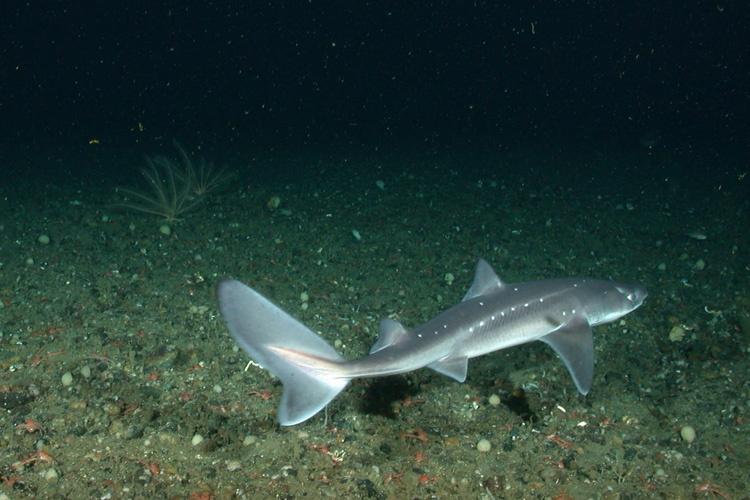
Pacific spiny dogfish. Photo courtesy of the National Ocean Service.
These sharks are opportunistic predators, feeding on a wide variety of prey including fish, jellyfish, squid, crabs, and carrion. Through this broad diet, spiny dogfish help regulate multiple prey populations, playing a critical role in maintaining ecosystem balance and supporting a healthy marine food web. As one of the most abundant predators in the Salish Sea, their presence is essential to overall ecosystem stability.
Pacific spiny dogfish are also exceptionally long-lived, with lifespans reaching up to 80 years. Females generally begin reproducing around 35 years of age and experience one of the longest gestation periods of any vertebrate—approximately 24 months! After this extended pregnancy, females give birth to relatively small litters, averaging between five and twelve pups. This combination of late maturity, long gestation, and low reproductive output makes the species particularly vulnerable to population declines.
In addition to spiny dogfish, the Salish Sea is home to other shark species, including Sixgill sharks, Broadnose sevengill sharks, Tope sharks (also known as Soupfin or School), brown catsharks, salmon sharks, and more. Importantly, there has not been a documented shark incident in Washington waters since 1996, and that incident occurred along the outer coast. Sharks are not a threat to humans—they are simply living in the marine environment they have occupied for hundreds of millions of years. We are fortunate to share these waters with them and have the opportunity to help ensure their continued survival.

Physical Pollution
One of the most significant sources of physical pollution in Puget Sound is derelict fishing gear. Abandoned, lost, or discarded gear—often referred to as ghost fishing gear (GFG)—poses a serious entanglement risk to marine life, from fish and sharks to birds and whales. Between 2002 and 2016, the Northwest Straits Foundation removed more than 5,900 derelict nets from Puget Sound. Within those nets, over 460,000 animals representing 270 species were documented. The Foundation estimates that 10 to 30 commercial gillnets are lost in the region each year.
GFG is a major cause of concern for sharks due to entanglement. These nets, lines, and hooks can become caught on rocks and reefs, stay floating in the water column or surface waters, or sink to the sea floor, where it continues to entangle animals indiscriminately. Sharks are particularly vulnerable due to their body shape, which allows nets and lines to easily snag on fins.
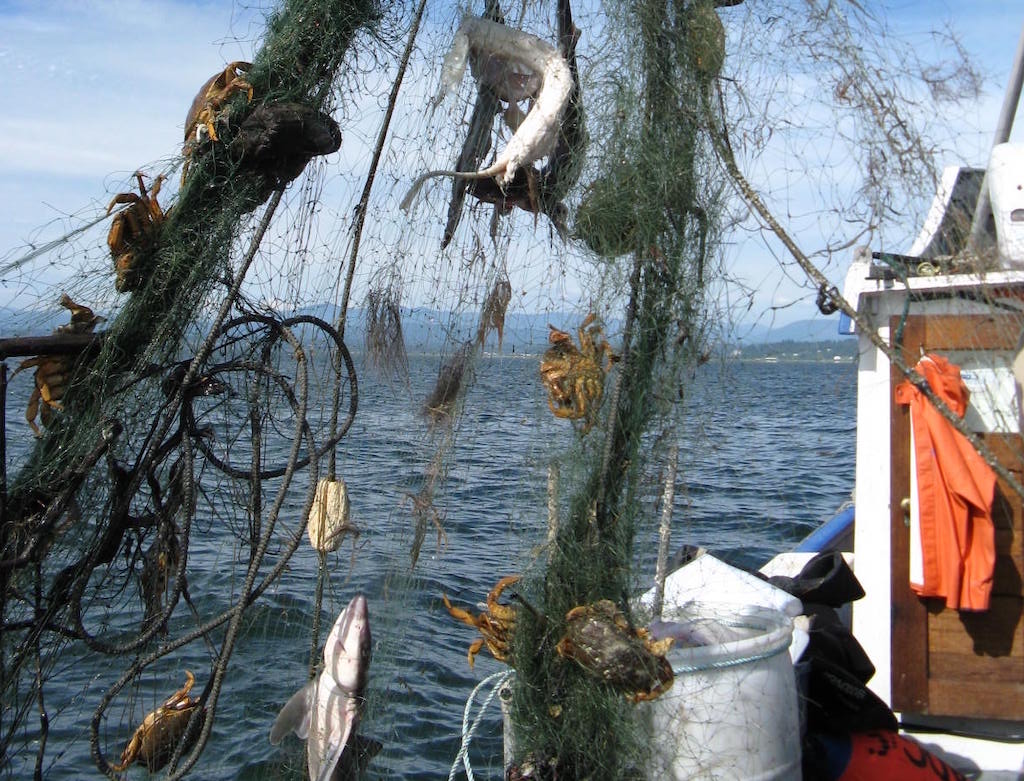
Derelict fishing gear with animal carcasses found by the USFWS Puget Sound Coastal Program. Photo courtesy of Joan Drinkwin/USFWS.
It is not just GFG that poses entanglement threat to sharks – active commercial fishing gear is another common source of entanglement and death. Many sharks use a breathing technique called obligateram ventilation where the shark must continually move forward to pass water over their gills to obtain oxygen from the water. If the shark stops moving, they suffocate from lack of oxygen. When a shark becomes entangled, it can no longer move itself forward to breathe. Entanglement deaths can be a result of asphyxiation, starvation, injury, or a combination of all factors.
Plastic ingestion, while not as harmful as entanglement, is still a threat to sharks. Due to their position high up on the food chain, sharks have the potential to consume a high amount of plastic from their various prey items. Plastic pollution has found its way into every ocean and has been found in species from plankton, whales, and even deep-sea animals. Many sharks are opportunistic predators, feeding on diverse prey items. Unfortunately, it is more likely than not that their prey has plastic inside of them, leading to a multitude of potential issues.
Plastics can cause internal injury, blockage, or a false sense of satiation. Plastic can also absorb chemical toxins from the environment and carry them into the shark’s body, increasing the overall toxin level. Planktivorous (filter-feeding) sharks, like whale sharks and basking sharks, are at higher risk of plastic ingestion due to their feeding mechanism. These filter feeders open their mouths to gulp down large amounts of water and sieve out prey items from the water, expelling water through their gills. This feeding strategy is non-specific and can result in large influxes of micro- and nanoplastics.
Chemical Pollution
Chemical pollutants can bioaccumulate and biomagnify in sharks as well, in the same way that plastic pollution can accumulate. Toxins like mercury, DDT, and PCBs pose serious threats to sharks and rays. Their long-life span, high position on the food web, and large, lipid-rich livers make them extremely susceptible to bioaccumulation. Unlike bony fish, sharks do not have swim bladders. Instead, they rely on their light, cartilaginous skeletons and large, lipid-rich livers for buoyancy. These oily livers provide ample storage space for fat-soluble pollutants, allowing toxins to accumulate to high levels. For a pollutant to bioaccumulate, it must be biologically active, long-lived, and fat-soluble (EX: DDT, PCBs, mercury, cadmium). Sharks do not have swim bladders like bony fish. Instead, they rely on their light, cartilaginous skeleton and large, oily livers to keep them buoyant. Because of this, they have ample lipid-rich space for these fat-soluble pollutants to persist in.
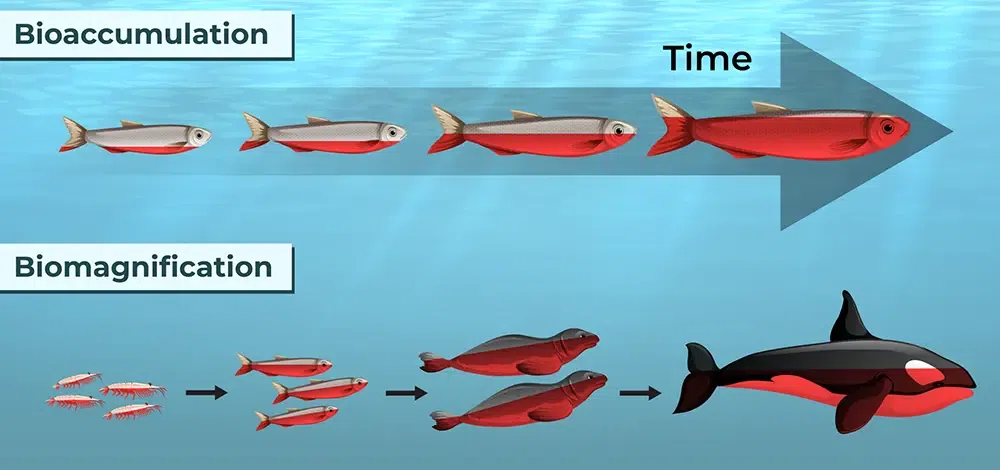
Exposure to chemical contaminants can lead to endocrine disruption, immune suppression, reproductive failure, behavioral changes, and impaired development. A 2012 study by Mull et al. found that young-of-the-year white sharks from the Southern California Bight exhibited higher concentrations of PCBs and DDT than older white sharks or any other elasmobranch recorded at the time. Researchers attributed this pattern to maternal offloading, a process in which pollutants are passed from mother to offspring during gestation, as well as to the sharks’ proximity to heavily polluted coastal habitats.
Noise Pollution
The effects of noise pollution on marine mammals are well known, but did you know that noise pollution also impacts fish? And sharks are fish! Fish don’t have ears like us, but they do have inner ears with sensory cells to detect underwater noise. Sharks are sensitive to the movement of water induced by sound waves. Inside the inner ear of a shark are hair cells that detect movement and send signals to the brain to be interpreted as sound.
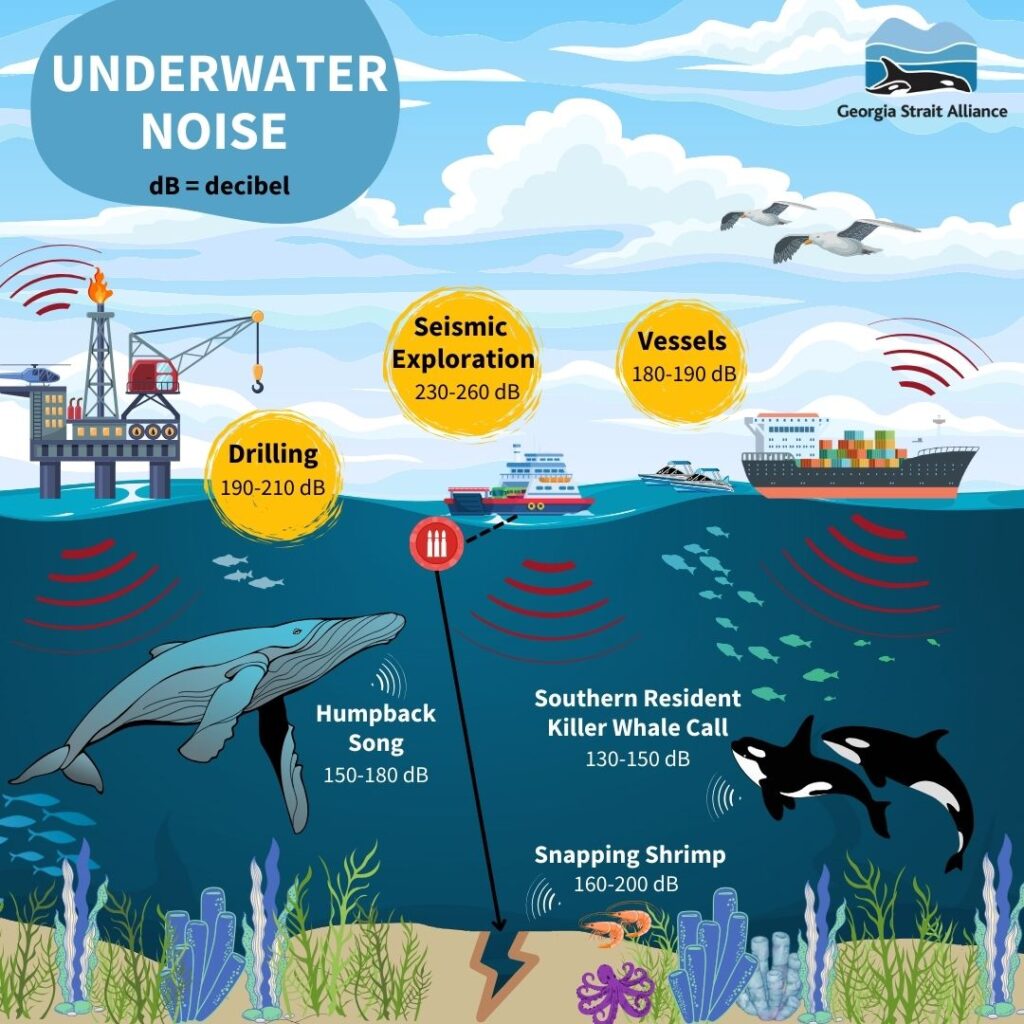
Graphic courtesy of Georgia Strait Alliance.
Hearing has the greatest operational range of any shark sensory system, making it invaluable to their survival. Because sound travels faster and farther underwater than in air, it is critical for detecting prey, predators, and environmental cues. Minimal thresholds for signal detection, essentially sensitivity to hear a sound, can be impaired when there are inorganic sources of noise in the shark’s environment. Effects of noise pollution in fish include physiological stress, tissue damage, temporary threshold shifts (hearing impairment), disorientation, altered movement patterns, and reduced reproductive success. It can also increase predation risk, lower foraging success, and disrupt resting, communication, and social cohesion.
The practice of chumming the water to attract sharks for tourism purposes has shown to lead to sharks aggregating based on vessel noise in anticipation of a feeding event which can alter normal migration, site use, and predation.
Studies have shown that Port Jackson sharks exhibit increased shelter seeking behavior and higher respiration rates when anthropogenic noise is present. Small spotted cat sharks exhibited increased swimming and a preference for areas of the study site that were less noisy.
So, what can we do?
When you advocate for the ocean—by engaging with ocean-related policy, participating in beach cleanups, volunteering with conservation organizations, or supporting conservation-focused initiatives—you are also helping sharks.
Sharks are a vital piece of a much larger ecological puzzle. The ocean is a complex, deeply interconnected system that depends on the health of all its components. As apex and mesopredators, sharks help maintain balance throughout marine food webs. However, they face numerous threats, with overfishing being the most significant. Any action that supports ocean conservation helps reduce the cumulative pressures sharks face, making their fight for survival just a little easier.
To learn more, stay engaged, and act, explore these nonprofit organizations dedicated to shark conservation.
Shark Stewards: https://sharkstewards.org/
Shark Allies: https://sharkallies.org/
Fins Attached: https://finsattached.betterworld.org/
Shark Conservation Fund: https://www.sharkconservationfund.org/
MISS Elasmo: https://www.misselasmo.org/
Sources: